
How to Stimulate Your Vagus Nerve at Home: 12 Science-Backed Ways
This post contains affiliate links. If you buy something through one of them, we may earn a small commission — at no extra cost to you. We only recommend things we'd genuinely stand behind.
The research is clearer than the wellness industry makes it look. This is what actually works.

If you’ve read our introduction to the vagus nerve, you know it’s the main nerve of the parasympathetic nervous system, responsible for rest, digestion, and recovery, and that its tone directly affects your capacity for calm, connection, and emotional flexibility. The question most people have after learning that is: so what do I actually do about it?
There’s a lot of noise around this. Cold plunges, tuning forks, supplements, elaborate devices. Some of it is well-supported. Some of it is marketing dressed up in neuroscience language. What follows is an attempt to separate the two.
A note on how this works
Vagal stimulation isn’t about hitting a switch. It’s about repeatedly activating the parasympathetic system and giving it practice at recovery. Think of it less like a treatment and more like exercise: the benefit comes from consistency over time, not from any single session.
Heart rate variability, the most reliable proxy for vagal tone, improves gradually. Most of the research on these practices uses protocols of several weeks to several months. One cold shower won’t rewire your nervous system. A daily practice might, over time.
With that in mind, here are twelve approaches with actual research behind them.
1. Extended exhale breathing
This is the most accessible and one of the most researched. Your heart rate rises slightly on the inhale and drops on the exhale, a phenomenon called respiratory sinus arrhythmia. Making the exhale longer than the inhale directly engages the vagal brake.
A simple starting point: inhale for 4 counts, exhale for 6 to 8. Five minutes is enough to shift your state. Ten minutes daily over several weeks shows measurable HRV improvement in the research.
Box breathing (equal counts for inhale, hold, exhale, hold) and 4-7-8 breathing both work through the same mechanism.
2. Humming, chanting, and gargling
The vagus nerve innervates the muscles of the larynx and throat. Vibrating those muscles activates vagal pathways directly. This is not metaphorical — the research on humming and gargling shows measurable effects on heart rate and HRV.
Gargling with water vigorously for 30 seconds several times a day is the simplest version. Humming, chanting, or singing (especially sustained vowel sounds like “om” or “ah”) work through the same pathway. Group singing in particular has strong evidence for co-regulation effects, the nervous systems of people singing together tend to synchronise.
3. Cold water on the face
Submerging your face in cold water, or even just splashing it, triggers the diving reflex, a hard-wired vagal response that slows the heart and shifts the body toward parasympathetic dominance. The effect is rapid, usually within seconds.
Ending a shower cold achieves a similar result with slightly less intensity. The research on cold water immersion and HRV is robust. The discomfort is real and temporary.
4. Slow, diaphragmatic breathing
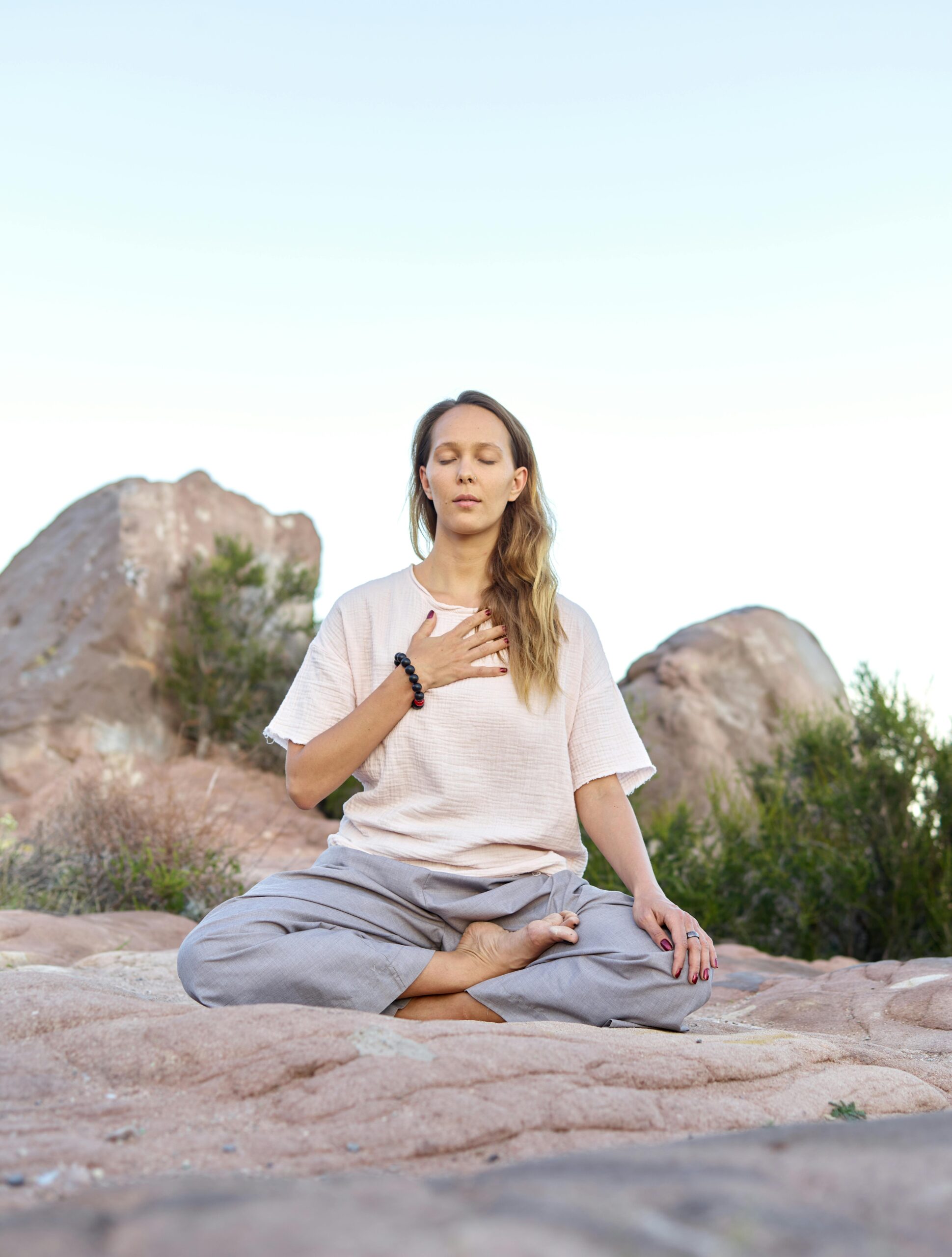
Related to extended exhale breathing but distinct. Diaphragmatic breathing, breathing from the belly rather than the chest, activates stretch receptors in the lungs and diaphragm that feed directly into vagal pathways. Chest breathing tends to keep the sympathetic system more active.
A useful check: place one hand on your chest and one on your belly. On the inhale, the belly hand should rise more than the chest hand. For most people under chronic stress this is the reverse of their default pattern.
5. Yoga and slow movement
Yoga has one of the stronger bodies of research for vagal tone improvement, likely because it combines diaphragmatic breathing, body awareness, slow movement, and parasympathetic activation in a single practice. The specific style matters less than the breath focus and pace. A fast-paced, breath-holding practice is less effective than a slow, breath-coordinated one.
Tai chi and qigong show similar results for similar reasons.
6. Meditation
Mindfulness meditation improves HRV in multiple studies, with the effects most pronounced in longer-term practitioners. Loving-kindness meditation (metta) shows particularly strong effects, possibly because it activates the social engagement system alongside the parasympathetic response.
Even ten minutes daily over eight weeks shows measurable changes in the research. The mechanism is partly attentional and partly physiological: slowing attention slows the body.
7. Cold exposure
Beyond the face-submerging reflex, more sustained cold exposure (cold showers, cold water swimming, ice baths) appears to improve vagal tone over time through repeated activation of the parasympathetic system. The research here is growing, partly driven by interest in cold water swimming as a mental health intervention.
Worth noting: the stress response to cold is real, and for people with certain cardiac conditions or significant trauma histories, cold exposure should be approached carefully and discussed with a doctor first.
8. Social connection and laughter
Genuine social connection activates the ventral vagal system directly. Eye contact, attuned conversation, physical proximity to a regulated person, and laughter all show effects on HRV in the research. This isn’t a soft finding. The nervous system evolved for social co-regulation and responds to it reliably.
Laughter specifically has been studied as a vagal stimulant. The mechanism involves the diaphragm, breath, and social engagement systems simultaneously.
9. Singing (especially in groups)
Separate from humming and chanting, group singing deserves its own entry because the research on it is strong enough. Choir singing in particular shows sustained HRV improvements in participants over time, and the synchronisation of breath and voice between singers appears to produce co-regulatory effects beyond what solo practice achieves. If you have any inclination toward it, this is one of the highest-return practices available.
10. Exercise
Aerobic exercise improves vagal tone over time, with consistent moderate-intensity exercise showing the most reliable effects on HRV. The key word is consistent: a single bout of intense exercise temporarily suppresses HRV while the body recovers. The benefit is cumulative and shows up over weeks of regular practice.
Walking, cycling, swimming, and similar activities all work. The threshold for benefit is lower than most people assume, 20-30 minutes of moderate activity most days is sufficient in the research.
11. Omega-3 fatty acids
The evidence here is less dramatic than for the behavioural practices but worth including. Multiple studies have found associations between omega-3 intake and higher HRV, with the effect appearing in both dietary and supplementation research. The mechanism isn’t fully understood but likely involves anti-inflammatory pathways that affect vagal function.
Fish oil supplementation or a diet high in fatty fish (salmon, mackerel, sardines) are the most studied sources. This isn’t a primary intervention but it’s a low-effort addition to the others.
12. Vagal stimulation devices
For people who find it hard to access regulated states through the practices above, either because of significant trauma, chronic dysregulation, or simply because self-directed practice feels inaccessible, devices designed for vagal stimulation offer a more passive route.
Sensate uses infrasonic resonance applied to the chest to stimulate the vagus nerve and has several studies supporting its effectiveness for stress and anxiety reduction. It’s become fairly popular among somatic therapists working with clients who struggle with breath-based regulation. Medical-grade transcutaneous vagus nerve stimulation (tVNS) devices also exist and are increasingly available without prescription, though they sit at a higher price point.

How to build a practice
Trying to implement all twelve at once is a reliable way to implement none of them. A more useful approach:
Pick one or two that fit your current life without requiring much friction. Extended exhale breathing before bed costs nothing and takes five minutes. Gargling in the morning adds thirty seconds to an existing routine. Cold water at the end of a shower is uncomfortable but brief. Start there, do it consistently for a few weeks, and add from the list as those become habitual.
The nervous system responds to repetition. A small practice done daily outperforms an intensive one done occasionally. Consistency is the intervention.
Read next
- What Is the Vagus Nerve and Why Does It Matter?
- What Is the Window of Tolerance?
- Heart Rate Variability: What It Is and How to Improve It
SomaticGround.com explores the science of the nervous system and its connection to relationships, healing, and the embodied life. All content is for educational purposes and is not a substitute for professional medical or psychological care.