

Heart Rate Variability (HRV): What It Is and How to Improve It
This post contains affiliate links. If you buy something through one of them, we may earn a small commission — at no extra cost to you. We only recommend things we'd genuinely stand behind.
Your heart doesn’t beat like a metronome. The variation between beats is one of the most useful health metrics most people have never heard of.

If you’ve spent any time in the wellness or biohacking space, you’ve probably come across HRV. It shows up on fitness trackers, in recovery apps, in conversations about stress and performance. It’s one of those metrics that gets mentioned a lot without being explained particularly well.
HRV is worth understanding properly, because it’s one of the most direct, measurable proxies for vagal tone and nervous system flexibility that exists. And unlike a lot of wellness metrics, it’s actually grounded in decades of robust research.
What heart rate variability is
Most people assume a healthy heart beats at a steady, consistent rate. It doesn’t. Even at rest, the time between consecutive heartbeats varies slightly from beat to beat. This variation is heart rate variability.
A heart rate of 60 beats per minute doesn’t mean one beat every exactly one second. It means an average of 60 beats per minute, with the actual intervals between beats varying by milliseconds. Some intervals are slightly longer, some slightly shorter, and the pattern of that variation carries significant information about the state of the autonomic nervous system.
Higher HRV means more variation between beats. Counterintuitively, this is the healthy state. It indicates that the autonomic nervous system is flexible and responsive, able to shift between sympathetic and parasympathetic activity smoothly in response to the body’s changing demands. Lower HRV means less variation, more rigidity, a nervous system that is less able to respond fluidly. It’s associated with chronic stress, poor recovery, cardiovascular disease, anxiety, depression, and a range of other health outcomes in the research.
Why HRV reflects vagal tone
The variation in heartbeat timing is largely controlled by the vagus nerve. On each inhale, vagal activity decreases slightly and heart rate rises. On each exhale, vagal activity increases and heart rate falls. This is respiratory sinus arrhythmia, the same mechanism that makes extended exhale breathing an effective regulation tool.
The more responsive the vagus nerve is, the more this natural variation occurs, and the higher the HRV reading. This is why HRV is considered one of the most reliable non-invasive proxies for vagal tone. When you measure HRV, you’re essentially measuring how well your vagus nerve is doing its job.
What affects HRV
HRV is sensitive to a wide range of factors, some chronic and some acute.
Sleep quality has one of the strongest effects. A single night of poor sleep produces measurable HRV suppression the following day. Chronic sleep deprivation keeps HRV chronically low. This is one reason HRV tracking is popular among athletes: it provides an objective signal of recovery status that subjective self-assessment often misses.
Alcohol suppresses HRV significantly, even in moderate amounts, with effects measurable for up to 24 hours after consumption. Most people tracking HRV notice this clearly.
Stress, particularly psychological stress with no physical discharge, is one of the main drivers of chronically low HRV. The sympathetic system stays elevated, the vagal brake doesn’t engage properly, and the variation between beats narrows.
Physical fitness improves HRV over time, particularly sustained aerobic exercise. This is one of the most consistent findings in the HRV literature.
Age reduces HRV naturally. The nervous system becomes less flexible as we age, which is part of why the health associations of low HRV become more pronounced with age.
Trauma, chronic illness, certain medications, and poor nutrition all affect HRV. So does social connection, or the lack of it: isolation is associated with lower HRV in multiple studies, consistent with the nervous system’s fundamental social orientation.
How to measure it
You don’t need expensive equipment to track HRV, though dedicated devices give more accurate readings than consumer wearables.
Chest strap heart rate monitors paired with HRV apps (Elite HRV and HRV4Training are the most widely used) give clinical-grade accuracy at a relatively modest cost. They’re the standard for people who want to take the metric seriously.
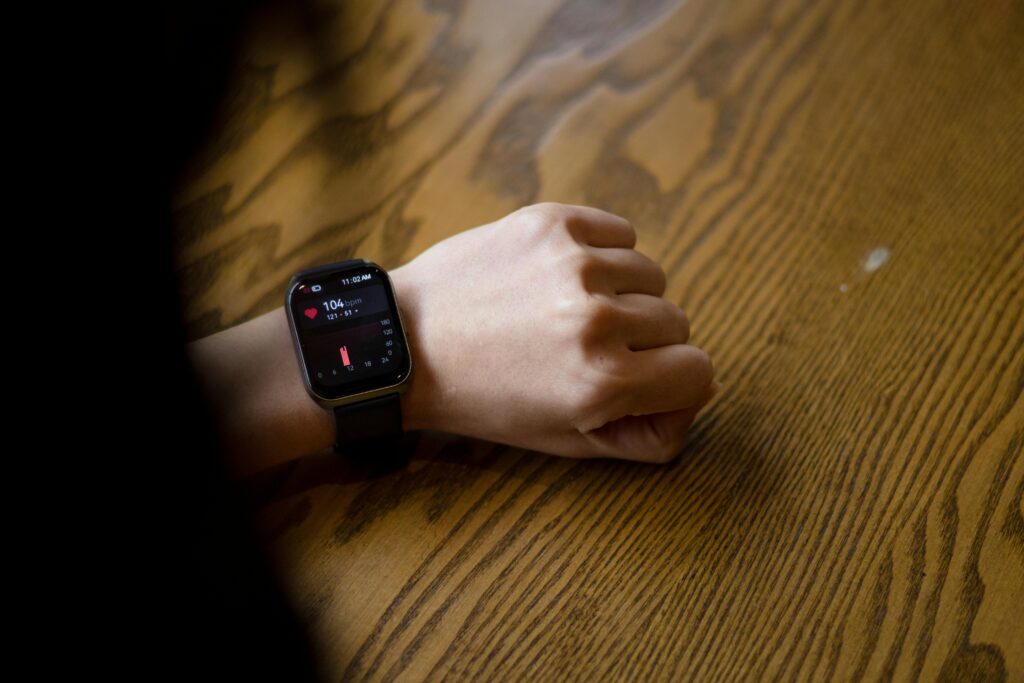
Wrist-based wearables including Garmin, Polar, Whoop, and Apple Watch all measure HRV with varying degrees of accuracy. They’re sufficient for tracking trends over time even if the absolute numbers differ from clinical standards. The trend matters more than any single reading.
The standard protocol for meaningful HRV measurement is a five-minute resting reading taken at the same time each day, typically first thing in the morning before getting up. Single readings are noisy. The trend over days and weeks is where the useful information is.
How to improve HRV
Most of the practices that improve vagal tone improve HRV, which makes sense given the relationship between the two. The practices with the strongest evidence specifically for HRV include:
Slow, paced breathing at around five to six breaths per minute, which corresponds to the resonant frequency of the cardiovascular system and produces maximum heart rate oscillation. This is sometimes called resonance frequency breathing or coherent breathing. Five minutes daily shows measurable HRV improvement in multiple studies over four to six weeks.
Aerobic exercise done consistently over weeks and months. The acute effect of intense exercise actually suppresses HRV temporarily while the body recovers, so HRV readings immediately post-workout aren’t meaningful. The chronic effect of regular training is clear improvement over time.
Sleep hygiene: consistent sleep and wake times, adequate duration, and reducing the things that fragment sleep or reduce sleep quality.
Cold exposure, through cold showers or cold water swimming, with the research showing both acute effects on HRV during exposure and longer-term improvements in people who practice it regularly.
Reducing alcohol intake. For people who drink regularly and are tracking HRV, this tends to be one of the most immediately visible interventions.
Vagal stimulation devices like Sensate are specifically designed to improve vagal tone and show HRV improvements in their clinical data. Worth considering for people who want a passive option alongside the behavioural practices. Use code SOMATICGROUND for 10% off.
For people interested in tracking HRV seriously, a chest strap monitor is worth the investment over relying solely on a wrist wearable. Several good options are available on Amazon at different price points.
How to interpret your numbers
HRV varies enormously between individuals. A reading that’s low for one person may be perfectly normal for another. This is why comparing your HRV to published averages is less useful than tracking your own baseline and looking for changes.
What matters is your personal trend. If your HRV is consistently rising over weeks of changed behaviour, that’s meaningful. If it’s dropping during a stressful period or after poor sleep, that’s also meaningful. If it spikes after a good night’s sleep or a rest day, that tells you something about what your body needs.
The goal isn’t to chase a particular number. It’s to develop enough familiarity with your own HRV patterns that the metric becomes genuinely useful information about your nervous system’s current state.
Read next
- What Is the Vagus Nerve and Why Does It Matter?
- How to Stimulate Your Vagus Nerve at Home: 12 Science-Backed Ways
- Signs Your Nervous System Is Dysregulated
SomaticGround.com explores the science of the nervous system and its connection to relationships, healing, and the embodied life. All content is for educational purposes and is not a substitute for professional medical or psychological care.