

The Gut-Brain Connection: How Your Nervous System Runs Your Digestion
This post contains affiliate links. If you buy something through one of them, we may earn a small commission — at no extra cost to you. We only recommend things we'd genuinely stand behind.
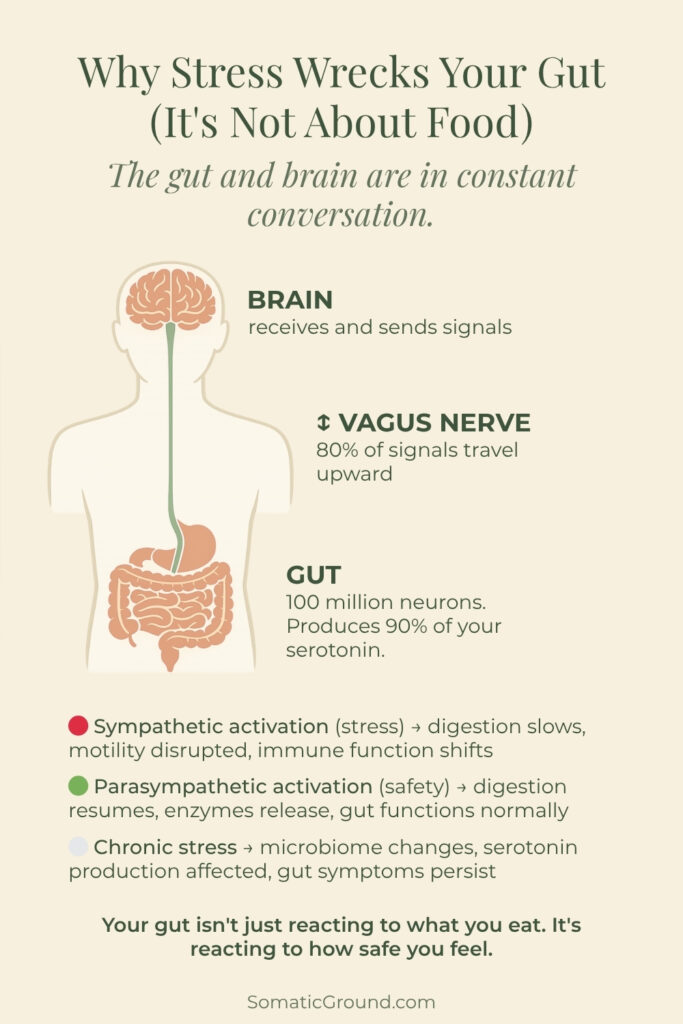
Your gut isn’t just reacting to what you eat, it’s reacting to how safe you feel.

Most people know, at some level, that stress affects digestion. Butterflies before a presentation, a stomach that knots up during conflict, or nausea that arrives with bad news before the mind has fully processed it. These experiences are so common they’ve become clichés.
What’s less commonly understood is why. Not in a vague “the mind and body are connected” way, but specifically, what is actually happening, physiologically, when emotional experience lands in the gut.
The answer involves the vagus nerve, a second nervous system that lives in your digestive tract, and a communication network between gut and brain that runs in both directions and influences everything from mood to immune function to how you process stress.
The enteric nervous system
The digestive tract contains what’s sometimes called the second brain: the enteric nervous system. It’s a network of around 100 million neurons lining the gut from the oesophagus to the colon, more neurons than the spinal cord contains. It can operate independently of the brain, regulating digestion without waiting for instructions from above.
This is why gut responses often precede conscious awareness. The gut’s nervous system is processing information and initiating responses faster than the brain’s cortex can form a thought about it. The stomach dropping before you’ve consciously registered that something is wrong isn’t a mystery. It’s the enteric nervous system doing its job.
The enteric nervous system is connected to the brain primarily through the vagus nerve. And as covered in the vagus nerve article, about 80% of the fibres in the vagus nerve run upward, from the body to the brain rather than the other way around. The gut is constantly sending information to the brain. The brain is largely just receiving it.
What the nervous system does to digestion
Digestion is a parasympathetically mediated process. The rest-and-digest branch of the autonomic nervous system is responsible for motility, the rhythmic movement of food through the digestive tract, enzyme production, blood flow to the gut, and the functioning of the gut’s immune system. All of these require the body to be in a state of relative safety and rest to function properly.
When the sympathetic nervous system activates in response to threat, digestion gets deprioritised. Blood flow moves away from the gut toward the muscles. Motility slows or becomes erratic. Enzyme production drops. The gut’s immune function shifts. In the short term, this is fine, missing one digestive cycle isn’t a problem. Under chronic stress, when the sympathetic system is elevated much of the time, it becomes one.
This is the direct pathway from nervous system dysregulation to gut symptoms. IBS, bloating, nausea, constipation, diarrhoea, or indigestion that doesn’t respond to dietary changes can all be expressions of a nervous system stuck in sympathetic dominance rather than primarily problems with what’s being eaten.
The gut microbiome and stress
The gut microbiome, the community of bacteria and other microorganisms living in the digestive tract, is increasingly understood to be part of this system rather than separate from it.
Stress alters the microbiome. Acute and chronic stress both change the composition of gut bacteria in ways that have downstream effects on inflammation, immune function, and the production of neurotransmitters. Around 90% of the body’s serotonin is produced in the gut, largely by specialised cells that are directly influenced by the gut microbiome and the enteric nervous system. So when the stress response is chronically elevated, it affects not just digestion but the production of the neurotransmitters that influence mood and emotional regulation.
The relationship runs in the other direction too. The microbiome communicates with the brain through vagal pathways, and the composition of the microbiome appears to influence anxiety, stress reactivity, and mood in ways that researchers are still mapping out. The gut doesn’t just react to psychological state. It contributes to it.
Why gut symptoms are often about more than food
This is the part that tends to reframe things for people who have spent years managing gut symptoms through diet alone.
Diet matters. Certain foods genuinely exacerbate gut symptoms in certain people. But for many people with IBS or chronic digestive difficulties, dietary changes produce only partial improvement because the underlying driver isn’t primarily what’s being eaten. It’s the state of the nervous system that’s receiving, processing, and responding to food.
A gut that’s operating under chronic sympathetic activation isn’t going to respond normally to food regardless of how carefully chosen it is. The motility will be off. The enzyme production will be suboptimal. The immune response in the gut wall will be dysregulated. The microbiome will reflect the chronic stress load.
Addressing the nervous system directly, through vagal tone practices, stress reduction, somatic therapy, and sleep, often produces gut improvements that dietary changes alone hadn’t managed. This isn’t because the gut symptoms were “all in the head”, they weren’t. It’s because the gut and the nervous system are the same system, and treating one while ignoring the other is working with only part of the picture.
What helps
Vagal tone practices are the most direct intervention. Extended exhale breathing, humming, cold water on the face, and the other approaches covered in our vagus nerve stimulation article all engage the parasympathetic system and improve the conditions for normal gut function. Consistent practice over weeks and months is more effective than occasional use.
Slow, mindful eating activates the cephalic phase of digestion, the parasympathetically mediated preparation for food that begins before eating and involves enzyme release, increased blood flow to the gut, and appropriate motility. Eating while stressed, rushed, or distracted suppresses this phase and compromises digestion from the start.
Addressing chronic stress load matters. The gut is giving real-time feedback about nervous system state. If gut symptoms are persistent and significant, they’re worth taking seriously as information about what the nervous system is carrying.
The Sensate device stimulates the vagus nerve directly through infrasonic resonance and has users who report gut symptom improvement alongside its primary stress and anxiety effects, consistent with the mechanism described here.
For reading, The Mind-Gut Connection by Emeran Mayer is the most thorough and accessible account of the gut-brain axis available for a general audience. Mayer is a gastroenterologist and neuroscientist who has spent his career researching this system, and the book covers both the science and the practical implications clearly.
A note on when to see a doctor
Persistent gut symptoms always warrant a medical assessment to rule out conditions that require specific treatment, including coeliac disease, inflammatory bowel disease, and others. The nervous system explanation for gut symptoms is real and relevant, but it doesn’t replace appropriate medical investigation. Both can be true simultaneously.
Read next
- What Is the Vagus Nerve and Why Does It Matter?
- How to Stimulate Your Vagus Nerve at Home: 12 Science-Backed Ways
- Signs Your Nervous System Is Dysregulated
SomaticGround.com explores the science of the nervous system and its connection to relationships, healing, and the embodied life. All content is for educational purposes and is not a substitute for professional medical or psychological care.