Best Meditation Apps for Anxiety and Nervous System Health (2026)
This post contains affiliate links. If you buy something through one of them, we may earn a small commission — at no extra cost to you. We only recommend things we'd genuinely stand behind.
Not all meditation apps are doing the same thing. Here’s how to find one that actually works for your nervous system.
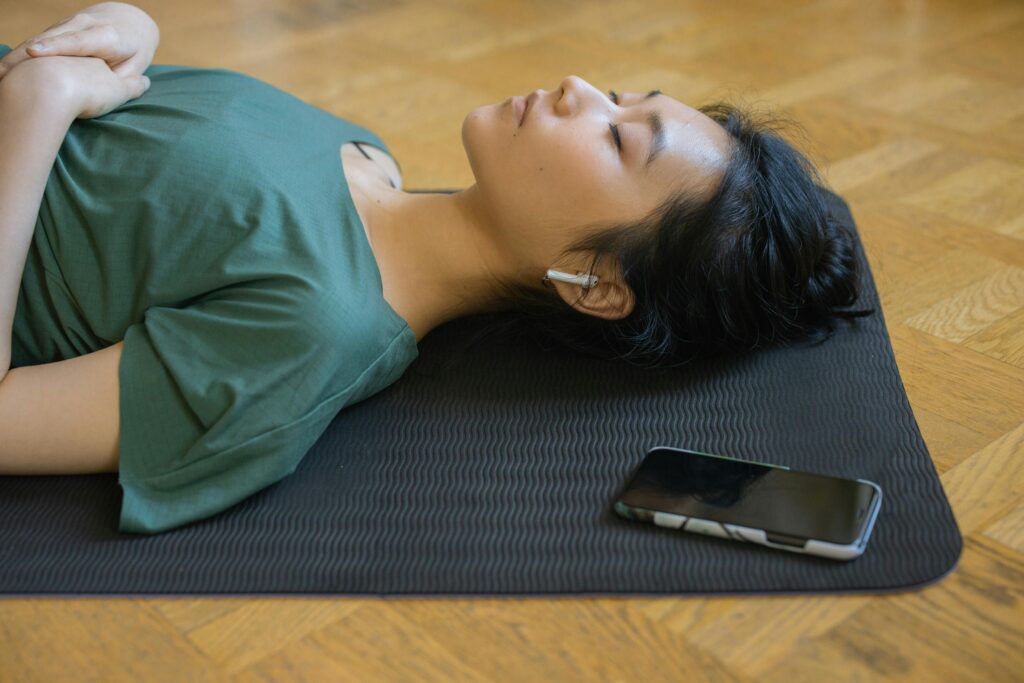
Meditation apps have become one of the most crowded spaces in wellness. There are dozens of them, the marketing is largely identical, and the difference between a useful tool and an expensive white noise generator isn’t always obvious from the outside.
The question worth asking isn’t which app has the most content or the best production values. It’s which one supports the specific thing you’re trying to do. For anxiety and nervous system regulation, that means apps that work with the physiological dimension of practice, not just the cognitive one. Breath-focused practices, body scan techniques, and approaches that specifically engage the parasympathetic system tend to be more effective for anxiety than general mindfulness content.
Here’s an honest look at the main options.
What to look for in a meditation app for anxiety
Before getting into specific apps, a few things worth understanding about what makes meditation useful for anxiety specifically.
The practices with the most evidence for anxiety and HRV improvement are breath-focused. Extended exhale breathing, paced breathing at around five to six breaths per minute, and body-based awareness practices all show consistent effects in the research. Apps that offer these as structured, guided practices are more useful for nervous system work than apps that focus primarily on mindset content or ambient sound.
Consistency matters more than session length. Ten minutes daily over several weeks produces measurable autonomic changes. An app that helps you build that habit reliably is more valuable than one with thousands of sessions you never use.
Body scan practices, which direct attention systematically through physical sensations in the body, are particularly relevant for nervous system regulation because they activate interoception, the brain’s awareness of internal body states, which is closely tied to emotional regulation capacity.
Calm
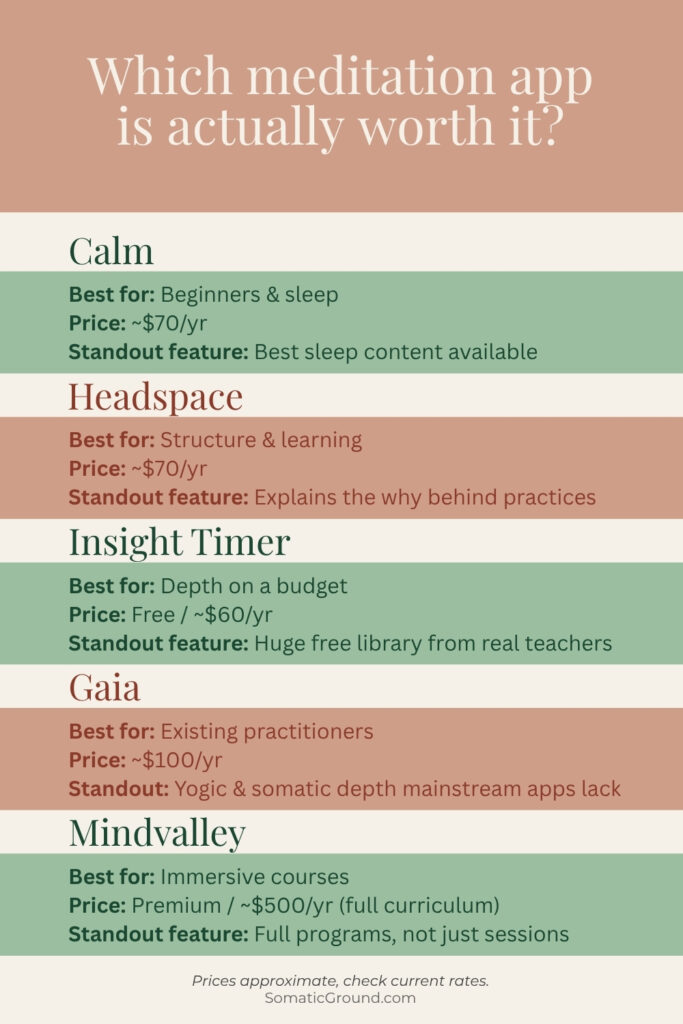
Calm is the most downloaded meditation app in several markets and one of the most polished in terms of production quality. Its anxiety-relevant offerings include a solid library of guided breathing exercises, body scans, and sleep content, the last of which is genuinely well-developed and among the better options for people whose anxiety primarily affects sleep.
The daily meditation feature is well-designed for habit-building, and the breathing exercises are straightforward and effective. The content library is broad enough that most people find something useful regardless of where they’re starting from.
The main limitation for nervous system-focused users is that Calm skews heavily toward relaxation and mindset content rather than somatic or physiologically-grounded practice. It’s a good entry point, particularly for people new to meditation, but advanced practitioners or people specifically seeking nervous system work may outgrow it.
Headspace
Headspace takes a more structured, course-based approach than Calm, which suits people who prefer a clear progression over an open library. The anxiety-specific courses are well-constructed, and the explanation of the mechanisms behind each practice is better than most competitors.
The breathing exercises are functional rather than sophisticated. The body scan content is solid. For people who want to understand why a practice works rather than just following instructions, Headspace’s explanatory approach is a genuine differentiator.
It’s worth noting that Headspace has published peer-reviewed research on its own platform’s effectiveness for anxiety and stress, which is unusual in this space and worth something even accounting for the inherent conflict of interest. The results are modest but real.
Insight Timer
Insight Timer operates on a different model from Calm and Headspace: the core app is free, with a vast library of community-contributed guided meditations alongside a premium tier. For someone willing to do a bit of filtering, the free library contains genuinely excellent nervous system and somatic content from experienced teachers that would cost considerably more on other platforms.
The search functionality has improved significantly and allows filtering by technique, duration, and teacher. For breathwork specifically, the range of practices available on the free tier is broader than most paid competitors.
The main drawback is quality variation. Community-contributed content ranges from excellent to poor and requires more discernment from the user. For someone who wants curation rather than a library, Insight Timer is less comfortable than Calm or Headspace.
Gaia
Gaia sits in a different category from the mainstream meditation apps. It’s a streaming platform rather than a meditation app specifically, covering yoga, meditation, conscious living content, and more esoteric programming. The meditation and breathwork content leans more toward spiritual and yogic traditions than clinical or research-backed approaches.
For people whose relationship to nervous system work is informed by yoga, somatic practice, or contemplative traditions, Gaia offers depth that the mainstream apps don’t. The instructors tend to have more substantial backgrounds and the practices are often more sophisticated than what Calm or Headspace offers.
It’s not the right starting point for someone new to meditation or primarily interested in evidence-based approaches. But for the SomaticGround audience, particularly those with an existing practice who want to deepen it, Gaia is worth considering. Gaia offers a free trial period if you want to explore it before committing.
Mindvalley
Mindvalley is a personal growth platform that includes meditation as part of a broader curriculum. The meditation content tends to be longer and more immersive than app-based formats, structured as courses with a clear arc rather than standalone sessions.
The nervous system content on Mindvalley is variable. Some programs are well-grounded and genuinely useful. Others lean more toward manifestation and peak performance framing that sits uneasily alongside the physiological reality of how regulation actually works.
Where Mindvalley earns its place in this list is in depth and production quality. For people who want a more substantial engagement with practice than a daily ten-minute app session, the course format offers something different. The commitment required is higher, but so is the potential payoff. Mindvalley offers trial access to sample programs before subscribing.
A note on free alternatives
It’s worth saying clearly that no paid app is required for effective meditation practice. YouTube contains excellent free guided breathwork and body scan sessions from credible teachers. The Wim Hof breathing method is available free directly from his website. Many somatic therapists post free guided practices on their own platforms.
If budget is a constraint, Insight Timer’s free tier and YouTube will serve most people’s needs adequately. The value of paid apps is primarily in curation, habit-tracking features, and interface quality rather than in content that’s otherwise unavailable.
The honest answer
No app replaces a consistent practice, and no practice replaces working with a practitioner if anxiety is significantly affecting your life. Apps are useful tools for building habit, maintaining a daily practice, and exploring different techniques. They’re not a substitute for therapy, somatic work, or the co-regulation that comes from being in relationship with people whose nervous systems are themselves regulated.
For building a daily meditation habit that directly supports nervous system flexibility, Calm is the most accessible entry point, Headspace is the most structured, and Insight Timer offers the most depth for free. Gaia and Mindvalley suit people already in a practice who want to go further.
Start with what you’ll actually use consistently. That’s the only criterion that matters.
Read next
- How to Stimulate Your Vagus Nerve at Home: 12 Science-Backed Ways
- Signs Your Nervous System Is Dysregulated
- What Is the Window of Tolerance?
SomaticGround.com explores the science of the nervous system and its connection to relationships, healing, and the embodied life. All content is for educational purposes and is not a substitute for professional medical or psychological care.