
5 Somatic Grounding Exercises for Anxiety
This post contains affiliate links. If you buy something through one of them, we may earn a small commission — at no extra cost to you. We only recommend things we'd genuinely stand behind.
Anxiety lives in the body. So does the way out.

Most advice for anxiety is cognitive. Identify the thought, challenge the thought, replace the thought with a more accurate one. This isn’t useless, cognitive approaches have real value, but for a lot of people they don’t go far enough, because anxiety isn’t primarily a thinking problem. It’s a body problem. The nervous system is activated, stress hormones are circulating, the threat-detection system is running, and no amount of rational reframing fully addresses what’s happening at that level.
Somatic grounding works differently. Rather than trying to think your way out of an activated state, it works with the body directly, using sensation, movement, and physical contact to shift the nervous system from sympathetic dominance toward parasympathetic recovery. The five exercises below are among the most researched and most practically accessible.
What somatic grounding actually does
Before getting into the exercises, it’s worth understanding the mechanism, because it changes how you approach them.
When the sympathetic nervous system is activated, attention narrows and moves upward and outward: toward threat, toward the future, toward the story running in your mind about what might happen. Grounding reverses this. It redirects attention downward and inward, toward the body, toward physical sensation, toward the present moment. This isn’t distraction. It’s a deliberate shift in where the nervous system is orienting.
The vagus nerve plays a central role here. Many grounding practices work partly by activating vagal pathways, which engage the parasympathetic brake and begin to slow the physiological activation. The body starts to receive signals that the threat has passed, even if the mind hasn’t caught up yet.
1. Feet on the floor
Simple to the point of seeming trivial. It isn’t.
Sit or stand with both feet flat on the floor. Take your attention to the soles of your feet. Notice the pressure of the floor underneath them. The temperature. Any texture you can feel through socks or shoes, or directly against the skin if you’re barefoot. Press down slightly and notice the floor pressing back.
Stay with that for two to three minutes. Let the breath slow naturally rather than forcing it.
The mechanism is proprioception: the sensory system that registers your body’s position in space. Activating it deliberately interrupts the upward-and-outward attentional pull of anxiety and brings the nervous system into contact with the present, physical environment. There’s no threat in the floor. The system can start to register that.
This is also one of the most unobtrusive exercises available. You can do it in a meeting, on public transport, or anywhere else where more visible practices aren’t practical.
2. The 5-4-3-2-1 sensory exercise
A structured way to engage all five senses and pull attention into the immediate physical environment.
Name, either aloud or internally: 5 things you can see. 4 things you can physically feel. 3 things you can hear. 2 things you can smell. 1 thing you can taste.
The key is specificity. Not “I can see a wall” but “I can see a white wall with a small scuff mark near the light switch and a shadow from the window frame.” Specificity requires enough present-moment attention to shut out the threat-focused mental activity that anxiety runs on.
This is one of the more evidence-based grounding techniques in the trauma literature, used widely in EMDR and somatic therapy as a stabilisation tool before processing difficult material.
3. Cold water
Holding your hands under cold water, splashing your face, or wrapping your hands around a cold glass activates the same physiological response as the cold water practices discussed in the vagus nerve article: a rapid shift toward parasympathetic dominance through the diving reflex and vagal activation.
For acute anxiety or the early signs of a panic response, this is one of the fastest interventions available. The cold sensation is immediate, impossible to ignore, and pulls the nervous system into the present physical environment with a reliability that most cognitive techniques can’t match.
Holding ice cubes is sometimes suggested for grounding, but for people with any history of self-harm, cold water or a cold drink achieves the same physiological result without the potential for harm.
4. Bilateral tapping
Alternating tapping on the left and right sides of the body, crossing the midline rhythmically, appears to have a calming effect on the nervous system that researchers believe is related to the same bilateral stimulation used in EMDR therapy.
A simple version: cross your arms over your chest and alternately tap your upper arms, left-right-left-right, at a slow, steady rhythm. Or tap alternately on your knees. Or simply walk, paying attention to the alternating left-right pattern of your footsteps.
The research on this outside of the formal EMDR context is still developing, but the clinical use is widespread and the anecdotal evidence strong enough to make it worth trying. Many somatic therapists use it as a between-session stabilisation tool.
5. Weight and pressure
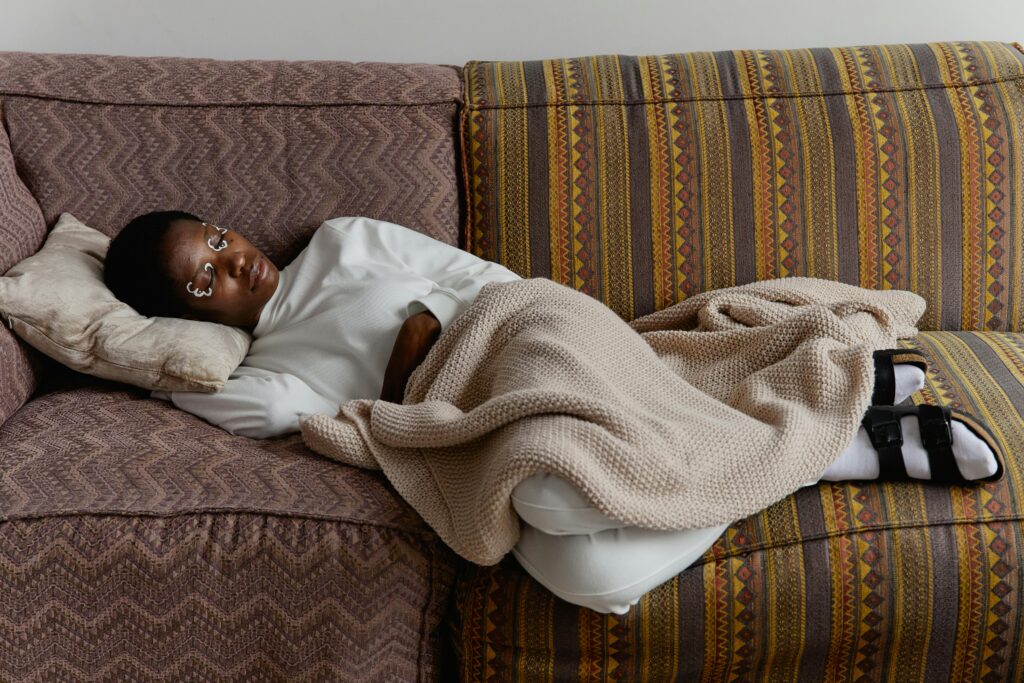
The nervous system responds to pressure and weight in ways that are physiologically measurable. Deep pressure stimulation, pressure applied to the body, activates the parasympathetic system and reduces cortisol in the research. This is the mechanism behind weighted blankets, which have multiple studies supporting their effectiveness for anxiety and sleep.
Practical versions that don’t require any equipment: sit with a heavy book or cushion on your lap and let your attention rest on the weight and warmth. Press your back firmly against a wall or the back of a chair and notice the pressure. Wrap yourself tightly in a blanket or a large jumper and stay with the sensation of containment.
Weighted blankets are worth the investment if anxiety or sleep difficulties are ongoing. The research is solid and the effect on a lot of people is significant. They range widely in price on Amazon, with the general recommendation being to choose a weight of around 10% of your body weight.
Building a practice
None of these exercises work well as emergency-only interventions. The nervous system learns through repetition, and a grounding practice done regularly, when you’re not in acute anxiety, builds the neural pathways that make it easier to access when you are.
Five minutes of feet-on-the-floor in the morning, before the day’s activation has built up, is more useful than twenty minutes of desperate grounding at the height of a panic response. Think of it less like a rescue tool and more like training, teaching your nervous system what settled feels like so it has somewhere to return to.
If anxiety is significantly affecting your daily life, somatic grounding exercises are a useful part of the toolkit but not a substitute for working with a practitioner. Somatic therapists and EMDR practitioners work with anxiety at a physiological level that self-directed practice can’t fully replicate.
Read next
- What Is the Vagus Nerve and Why Does It Matter?
- Signs Your Nervous System Is Dysregulated
- How to Calm Your Nervous System After a Fight
SomaticGround.com explores the science of the nervous system and its connection to relationships, healing, and the embodied life. All content is for educational purposes and is not a substitute for professional medical or psychological care.